

With the upgrading of global health consumption and the normalization of sports and fitness, the fitness equipment industry is ushering in a new round of industrial transformation. Recently, combined with the latest data released by the Global Fitness Equipment Association (GFEA) and the China Sporting Goods Industry Federation, as well as the on-site trend observation at the 2025 China Sports Show, the fitness equipment industry will continue to transform towards three core directions of "intelligence, greenization and scene segmentation" in 2026. The global market scale is expected to exceed 260 billion US dollars, and the Chinese market scale will reach 70 billion US dollars, ranking first in the world for six consecutive years, with the localization rate rising to more than 75%. The industry is steadily moving from "incremental expansion" to "quality improvement and upgrading", and a number of innovative enterprises and segmented tracks will usher in explosive growth.
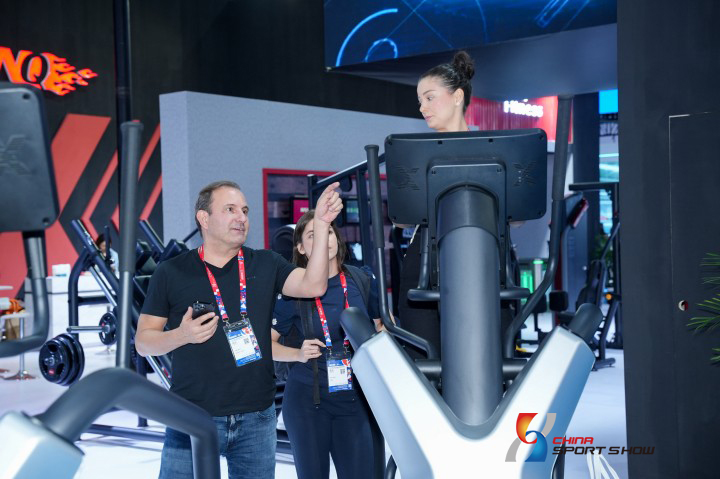
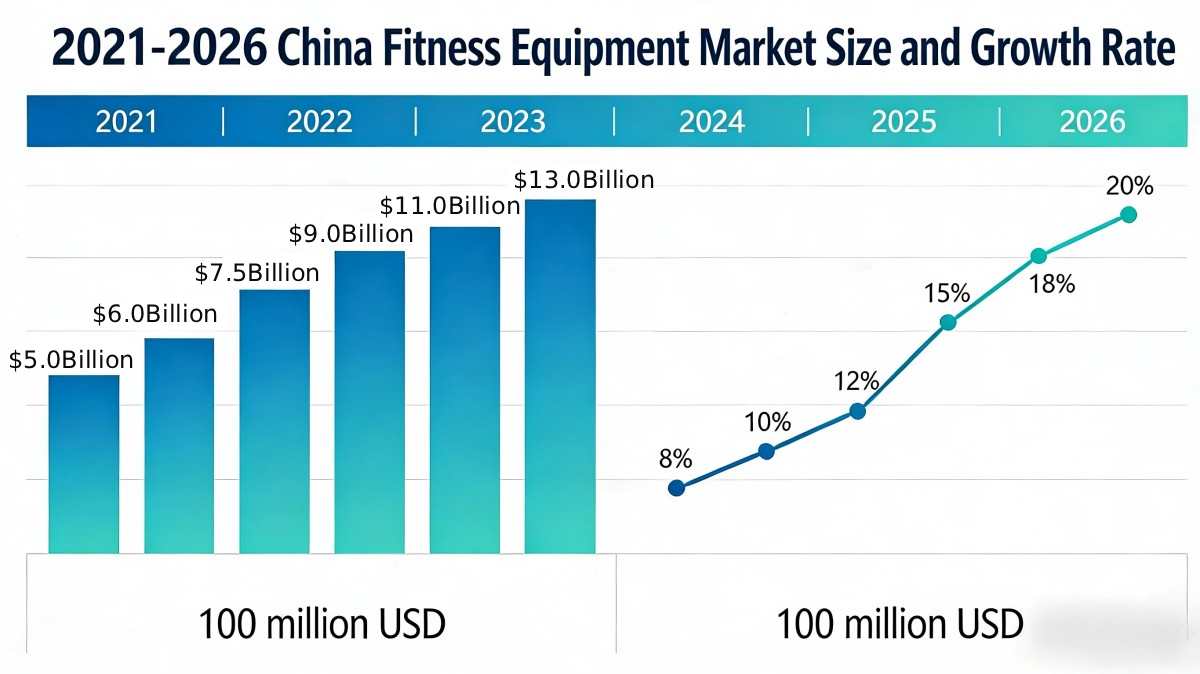
Intelligentization has become a core competitive advantage in the fitness equipment industry. The integration of AI technology with fitness equipment is upgrading from "basic data monitoring" to "personalized services and full-scenario linkage," becoming a key to differentiated competition for enterprises. Data shows that in 2025, the Chinese smart fitness equipment market reached US$22.3 billion, a year-on-year increase of 38.5%, with the penetration rate of AI interactive equipment exceeding 40%, and is expected to rise to over 50% in 2026.
In commercial settings, the trend of intelligent upgrades is particularly evident. Shuhua Sports, in collaboration with DeepSeek, has launched a new generation of "AI fitness assistant" on its touchscreen treadmills. After users input data such as height, weight, and exercise goals, the AI can quickly generate personalized training plans and adjust exercise intensity in real time, lowering the barrier to professional training. Qingdao Kangdun Health Industry Co., Ltd.'s seated chest press trainer innovatively allows users to switch between 3 levels and 5 strokes without releasing their grip. Combined with AI motion monitoring, it can precisely train different parts of the pectoralis major and deltoid muscles, changing the traditional single-mode strength training and gaining widespread attention from overseas customers.
In home settings, smart fitness equipment is transforming towards "compactness and integration." Besides smart fitness mirrors, products such as AI treadmills and smart yoga mats are continuously being iterated, enabling functions such as voice control, mobile app integration, and cloud-based course synchronization, allowing users to enjoy a professional fitness experience without leaving home. Industry insiders say that in the future, AI technology will be further integrated with health management and rehabilitation training, achieving interconnectivity between "training data + health data" and reconstructing the closed loop of the fitness experience.
With the "dual carbon" concept gaining widespread acceptance, green and low-carbon development has become a consensus in the fitness equipment industry. From raw material procurement and manufacturing to product recycling, the entire industry chain is undergoing green transformation, and environmentally friendly equipment has become a new market hotspot. Data shows that the global green fitness equipment market will reach $32 billion in 2025, a year-on-year increase of 27.8%, with solar-powered fitness equipment and equipment made from recyclable materials showing the fastest growth.
In terms of product innovation, solar-powered fitness equipment has become a new growth point, covering multiple categories such as solar-powered exercise bikes, solar-powered rowing machines, and solar-powered treadmills. These products convert clean energy into electricity through solar panels to power the equipment, reducing reliance on traditional electricity. They also combine fitness with environmental protection, making them suitable for outdoor fitness, community fitness, and other scenarios. They have been widely used in countries such as Europe, America, Japan, and South Korea, and the domestic market is gradually taking off.
In the production process, companies are increasing their investment in environmental protection, adopting green raw materials such as recyclable steel and environmentally friendly plastics, optimizing production processes, and reducing energy consumption and pollutant emissions. Fitness equipment industry clusters in Ningjin and Zhejiang are promoting the joint construction of green production bases and the sharing of environmentally friendly production equipment to achieve the dual goals of "increased production capacity and environmental compliance." Leading domestic companies have also launched "old equipment recycling programs" to dismantle, recycle, and reuse discarded fitness equipment, promoting the sustainable development of the industry. It is projected that by 2026, green fitness equipment will account for 25% of the domestic market, becoming a new growth engine for the industry.
With the diversification of fitness enthusiasts, fitness needs are showing characteristics of "personalization and scenario-based application," and the industry's segmented tracks continue to expand, gradually extending from the traditional commercial and home scenarios to multiple sub-sectors such as rehabilitation fitness, outdoor fitness, workplace fitness, and campus fitness, accurately matching the fitness needs of different groups. The growth rate of these sub-sectors far exceeds the industry average.
Rehabilitation and fitness equipment has become one of the fastest-growing sub-sectors, with the global market size reaching $28.6 billion in 2025, a year-on-year increase of 28.3%. Primarily targeting the elderly, post-operative recovery groups, and hemiplegic patients, the products emphasize "safety, comfort, and targeted features." In addition to rehabilitation equipment from companies like Ningjin Baodelong, many domestic companies have also developed age-friendly fitness equipment, incorporating features such as handrails, anti-slip designs, and slow start/stop mechanisms to meet the needs of elderly people for home rehabilitation and community fitness. These devices also integrate intelligent monitoring functions to monitor heart rate, blood pressure, and other data in real time, ensuring the safety of elderly users during exercise.
Outdoor fitness and workplace fitness are also gaining popularity. Runba Climbing Machine's indoor fully automatic climbing trainer condenses the core elements of outdoor climbing indoors, making it suitable for office building fitness centers, community sports centers, and other similar settings. Office workers can utilize fragmented time to complete high-intensity workouts. Since its launch, this product has been sold in dozens of countries and regions, with nearly 3,000 units sold, completing three generations of product iterations. Lightweight and portable outdoor fitness equipment, such as folding jump ropes and portable resistance bands, are also becoming the first choice for Generation Z fitness enthusiasts due to their suitability for outdoor settings, and sales continue to climb.
Despite the favorable development opportunities in the fitness equipment industry, challenges remain, including reliance on foreign core technologies, insufficient innovation capabilities among small and medium-sized enterprises (SMEs), and homogeneous competition. In the future, the industry will likely exhibit a polarized pattern, with companies possessing core technologies, brand advantages, and the ability to strategically position themselves in various application scenarios continuing to capture market share. Meanwhile, SMEs will need to focus on niche markets and cultivate differentiated advantages.
Looking ahead to 2026 and beyond, the fitness equipment industry will continue to deepen its transformation towards "intelligentization, greening, and scenario segmentation." Core technology innovation, comprehensive ecosystem development, and brand globalization will become key areas for enterprise development. Chinese fitness equipment companies will further increase R&D investment, break through core technology bottlenecks, and improve the level of domestic production. At the same time, leveraging the advantages of industrial clusters, they will promote the transformation from "Made in China" to "Chinese Brands," continuously expand into the global market, and contribute to the high-quality development of the global fitness equipment industry.
Copyright © 2026 Shandong Beckwell Fitness Equipment Co., Ltd. All Rights Reserved - Privacy Policy