

On November 20, 2025, the China Sporting Goods Federation released the "2025 Global Fitness Equipment Industry Development Report". Data shows that the global fitness equipment market size exceeded 60.28 billion, a year-on-year increase of 7.5%; among them, the penetration rate of smart fitness equipment (including AI motion correction and IoT interconnection functions) jumped from 35% in 2024 to 48%, contributing more than 60% of the market growth. As the world's largest fitness equipment production base, China's export volume of fitness equipment reached $6.83 billion in 2025 (a year-on-year increase of 6.6%), accounting for more than 50% of the global supply chain share. Brands such as Shuhua, CoolBuild and Johnson have entered the high-end European and American markets through technological innovation, promoting the transformation from "Made in China" to "Intelligently Made in China".
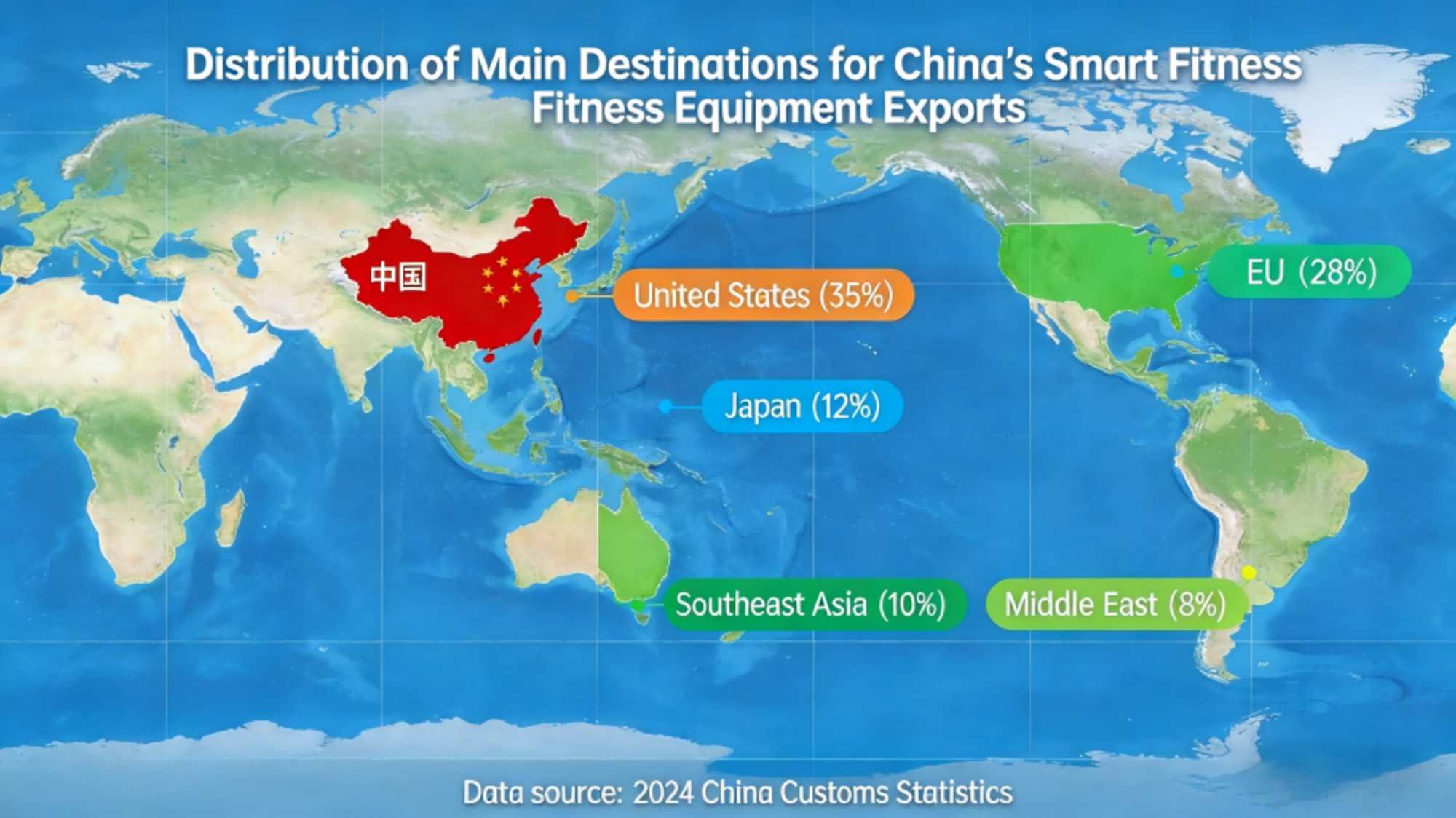
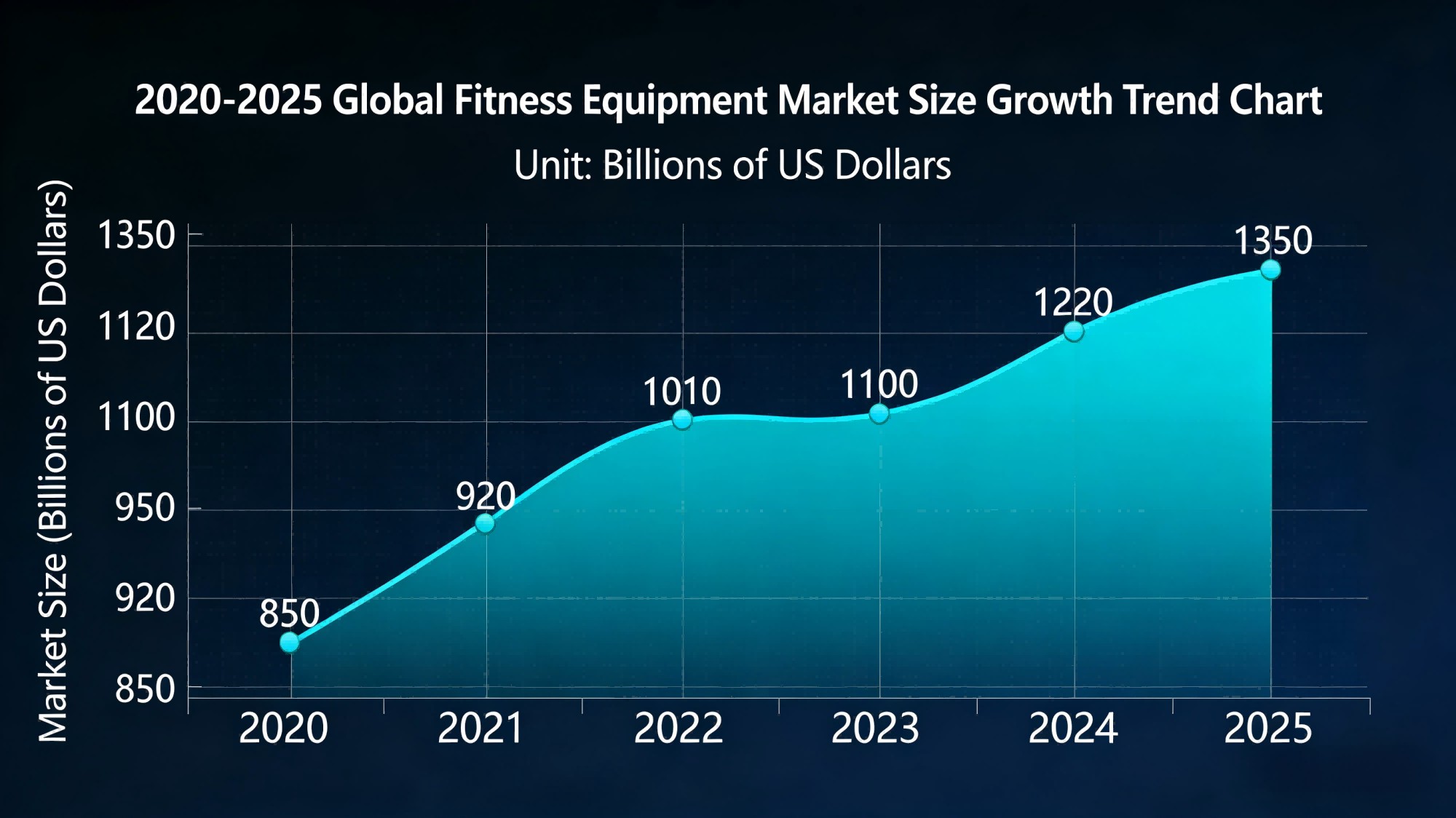
The report shows that the global fitness equipment market in 2025 will exhibit a pattern of "North America dominance and high growth in Asia Pacific": 1. The North American market size is US$21.1 billion (accounting for 35%), with the United States (US$17.2 billion) and Canada (US$2.86 billion) as the core, favoring high-end commercial equipment (such as the Coolpad AI system); 2. The European market size is US$15.7 billion (accounting for 26%), with the United Kingdom (US$2.98 billion) and Germany (US$2.75 billion) focusing on demand for senior-friendly equipment; 3. The Asia Pacific market size is US$18.4 billion (accounting for 31%), with a year-on-year growth rate of 12.8% (the highest globally), and China and India experiencing explosive growth in demand for home smart devices (such as Johnson Health Tech M6).
Chinese companies have achieved a dual breakthrough in "cost-effectiveness + technology" in the European and American markets by leveraging their supply chain advantages (85% localization rate of parts): Shuhua added 52 new overseas customers in 2025 and its products entered chain clubs such as Smart Fit Group in Brazil; Coolbold has entered 12 European countries through the IHRSA exhibition in the United States and FIBO exhibition in Germany.
In 2025, the core technological upgrades of smart fitness equipment will focus on three aspects: 1. AI applications (motion correction, personalized training plan generation), such as the SHOTLAB system of Sanbaishuo, which has a shooting motion recognition accuracy of 98%; 2. Internet of Things interconnection, with devices able to connect to health apps such as Apple Health and Google Fit to achieve data synchronization; 3. Biometric recognition, with some high-end equipment equipped with heart rate patches and body fat sensors to monitor body status in real time.
Wen Jia, Deputy Secretary-General of the China Sporting Goods Federation, said: "Smart technology has transformed fitness equipment from 'hardware' to 'hardware + services.' By 2025, the service revenue of Chinese smart fitness equipment companies will account for 28%, an increase of 10 percentage points compared to 2024, such as providing value-added services like course subscriptions and remote personal training."
Driven by global aging, the number of people aged 60 and above who exercise is projected to grow by 23% by 2025, leading to increased demand for low-impact, safety-focused fitness equipment: 1. Optimized equipment design (shock-absorbing pedals, anti-fall handrails); 2. Functional adaptation (such as adjustable resistance, seated training modes); 3. Medical-grade certification, with some products having obtained FDA and CE medical device certifications, making them suitable for post-operative rehabilitation training.
Good Family Group's intelligent resistance training equipment supports 50 levels of resistance adjustment (simulating a weight of 5-100kg) and has been implemented in communities in more than 100 cities across the country, serving more than 100 million people; Johnson Rehabilitation series equipment has entered 120 hospitals in the United States for postoperative joint rehabilitation training.
A: The main challenges are compliance certification (such as EU CE, US UL) and local after-sales service. Chinese enterprises solve this by: 1. Establishing local certification teams to ensure products meet regional standards; 2. Setting up spare parts warehouses in Europe and America (e.g., CoolBuild in Hamburg, Germany) to shorten maintenance time; 3. Cooperating with local distributors to provide localized service.
A: The Asia Pacific home fitness market will grow at 12.8% in 2025, with key segments including: 1. Space-saving equipment (e.g., foldable treadmills, compact elliptical machines) adapting to small apartments; 2. Budget-friendly smart devices (priced 800) meeting mass demand; 3. Rehabilitation-oriented equipment for post-illness recovery, driven by the increase in chronic diseases.
The China Sporting Goods Federation stated that the global fitness equipment market will continue to grow at a rate of 7%+ in 2026, with the penetration rate of smart devices expected to exceed 55%. Chinese companies need to focus on three main areas: 1. Technology research and development (such as AI large-scale model training plan generation and virtual reality fitness content); 2. Green manufacturing (using environmentally friendly materials and reducing energy consumption); 3. Service upgrades (such as membership courses and equipment rental models).
To support companies going global, the Federation provides: 1. International exhibition resources (such as organizing companies to participate in IHRSA in the United States and FIBO in Germany); 2. Certification consulting services (helping companies quickly obtain CE and UL certifications); 3. Data support (regularly publishing global market reports and providing demand insights).
The breakthrough in the global fitness equipment market in 2025 demonstrates the dual driving forces of increased health awareness and technological innovation. Chinese companies, leveraging their "intelligent manufacturing" capabilities, are transforming from "participants" to "leaders" in the global supply chain. Whether you are a chain gym, a distributor, or a home user, you can capitalize on the smart trend and choose high-quality, cost-effective Chinese fitness equipment.
Contact the China Sporting Goods Federation today to get the full version of the "2025 Global Fitness Equipment Industry Development Report", understand regional market demand and technological innovation directions, and work together to promote the development of the global fitness industry!
Copyright © 2026 Shandong Beckwell Fitness Equipment Co., Ltd. All Rights Reserved - Privacy Policy